




Why Pre-Conditioned Air Units Are Essential for Aircraft Maintenance
Key Takeaways
- Pre-conditioned air (PCA) units supply temperature-controlled air to parked aircraft – creating a safe and stable environment for maintenance crews and onboard systems.
- PCA units help prevent overheating and moisture-related damage in avionics – improving system reliability and reducing long-term wear.
Using PCA units instead of APUs significantly lowers fuel consumption and maintenance costs – while extending APU service life. - PCA systems improve ramp safety by reducing noise levels and eliminating exhaust emissions – resulting in better air quality and communication.
- A variety of PCA unit types and power configurations are available – allowing operators to match equipment to specific aircraft, facilities, and operating environments.
Aircraft maintenance doesn't stop when the engines shut down – but without proper climate control, working conditions inside the cabin and avionics bays can quickly become unsafe and inefficient. Pre-conditioned air (PCA) units provide the controlled environment technicians need to work safely, protect sensitive systems, and complete maintenance tasks more effectively.
In this article, we'll walk through why PCA units are an essential part of any aircraft maintenance operation, what types are available, and how to choose the right one for your needs.
What Are Pre-Conditioned Air (PCA) Units, and How Do They Work?
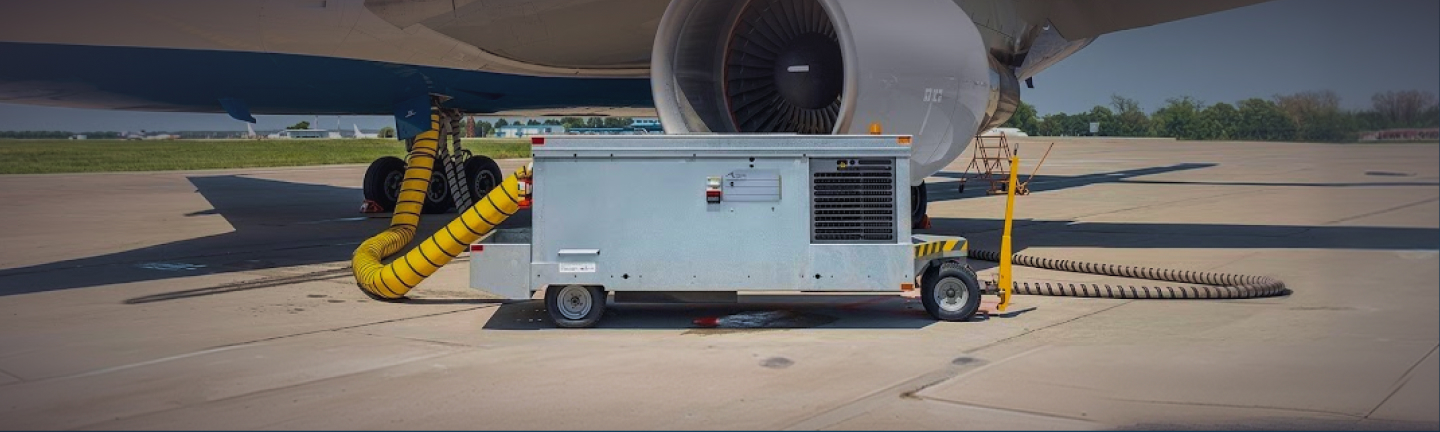
Pre-conditioned air units are ground-based HVAC systems that supply temperature-controlled air – cooled or heated – directly into a parked aircraft while its engines are off. Rather than relying on the aircraft's onboard environmental control system or APU, a PCA unit connects via a flexible, insulated hose to a designated ground service port, taking over the conditioning of the cabin, cockpit, and avionics bay with filtered, temperature-regulated air throughout the maintenance process.
PCA units are available in both fixed (ground-mounted) and mobile (cart-based) configurations, and can be powered by electricity, gas, LPG, or diesel – making them adaptable to virtually any operational environment, from a fully equipped MRO hangar to a remote maintenance stand.
Why Are PCA Units Important for Aircraft Maintenance Operations?
The conditions inside a parked aircraft deteriorate fast. Without an external air supply, cabin temperatures can climb to 122°F (50°C) in approximately 15 minutes. Within just five minutes, CO2 buildup can make the cabin air difficult to breathe – and that's without anyone actively working inside. Normal operations require 17 cubic meters of fresh air per person per hour to maintain safe, breathable conditions.
For maintenance technicians who may spend hours inside an aircraft – running diagnostics, replacing components, testing avionics – those numbers matter. A PCA unit keeps the working environment stable and safe, eliminating the risk of heat exhaustion, maintaining clear visibility, and allowing crews to focus on the work rather than fighting the environment. The result is faster task completion, fewer errors, and a safer worksite.
How Do PCA Units Protect Avionics and Aircraft Systems?
Modern aircraft are packed with temperature-sensitive electronics – flight management systems, navigation processors, communication hardware, and sensors that operate reliably only within defined thermal tolerances. During extended maintenance checks, these systems can accumulate heat from standby operation, elevated ambient temperatures, and nearby work activities. Without active cooling, that heat has nowhere to go.
PCA units maintain stable cabin and bay temperatures throughout prolonged maintenance sessions, preventing the thermal cycling that accelerates component wear and triggers moisture condensation in connectors and circuit boards. This is especially critical in hot and humid climates, where an unconditioned aircraft can reach damaging temperatures within minutes of engine shutdown. Protecting avionics integrity during ground operations isn't just good practice – it directly affects the reliability of systems that crews will depend on for the next flight.
How Can PCA Units Reduce Costs and Improve Efficiency?
Running an APU to condition a parked aircraft is expensive and inefficient. A Boeing 747-400 APU burns approximately 550 liters of fuel per hour, and APUs typically operate at 10% to 12% efficiency. Electric PCA systems, by contrast, operate at up to 50% efficiency in terms of primary energy use. Across a fleet or over a full maintenance season, that gap has a significant impact on operating budgets.
APUs also accumulate hours during ground conditioning, compressing maintenance intervals and accelerating replacement timelines. PCA units eliminate that wear entirely, extending APU service life and reducing unplanned downtime. Beyond the direct cost savings, a well-conditioned maintenance environment keeps technicians working at a consistent, effective pace – reducing rework, improving inspection quality, and helping crews stay on schedule.
How Do PCA Units Improve Safety and Air Quality on the Ramp?
APUs are loud. At approximately 80 dB(A) on the apron, they generate noise levels that interfere with crew communication, increase fatigue over a long shift, and contribute to the broader noise burden near airports and residential flight corridors. Electric PCA units operate at around 70 dB(A) – and because the decibel scale is logarithmic, that 10 dB difference represents roughly a 10-fold reduction in sound energy. That's a meaningful improvement for anyone working in and around the aircraft.
APUs also produce exhaust – CO2, NOx, and particulate matter – that degrades air quality directly at the worksite. Electrically powered PCA units produce no emissions at the point of use: the cabin receives clean, filtered air, and the ramp stays clear of combustion byproducts. Better air quality and lower noise levels directly translate into clearer communication, reduced fatigue, and a safer environment for everyone working on or around the aircraft.
What Types of PCA Units are Available for Aircraft Maintenance?
PCA units fall into two broad categories: fixed and mobile. Fixed units are permanently installed at gates or maintenance bays. Mobile units are cart-based and self-contained, making them the natural choice for MROs, remote stands, line maintenance, and hangars servicing multiple aircraft types. Within those categories, power source is the key variable:
Electrical PCA Units
Electrically powered units are the most energy-efficient option and produce zero onsite emissions. They're well-suited for hangars, maintenance facilities, and any gate with access to reliable shore power. Most electric models support a range of voltage configurations to match existing facility infrastructure, and some include integrated heating for year-round use in variable climates.
Gas and LPG-Powered PCA Units
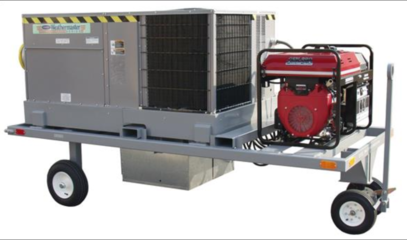
Gas and LPG units operate independently of shore power, making them the right choice for remote maintenance environments, field operations, and locations without consistent electrical access. They provide the full climate-control capability of an electric unit without the infrastructure requirements – ideal for operations that need flexibility above all else.
Voltage and Power Configurations
For electric units, matching the unit to available facility power is an essential part of the selection process. Common configurations include single-phase systems at 208V or 230V and three-phase systems at 208V, 230V, or 460V. Selecting the right configuration from the start avoids costly adapter setups and ensures the unit operates efficiently within the facility's existing electrical capacity.
What Are the Key Features to Look for in a PCA Unit?
Cooling capacity is the starting point. Units are typically rated at 2-ton (24,000 BTUH), 4-ton (45,000 BTUH), or 5-ton, with the right size depending on the aircraft type being serviced. Airflow performance – measured in CFM – determines how quickly and effectively the unit can condition the cabin; most 4-ton units deliver between 1,200 and 2,000 CFM.
Beyond capacity, hose diameter and length affect connectivity across aircraft types – a 12” diameter, 25’ hose is standard on most 4-ton units. For ramp environments, look for units rated at 76 dB or below. On mobile units, weight and wheel design determine how easily the unit can be repositioned across the floor. Built-in safety protections – high-pressure switches, loss-of-charge switches, freeze protection, and low oil shutdown – are worth confirming, particularly on units that run unattended during extended checks.
Which PCA Unit Brands and Models Are Available?
Pilot John International® (PJi®) carries PCA units from several of the industry's most trusted manufacturers, covering a range of capacities, power configurations, and form factors to match virtually any maintenance environment. Here's a look at what each brand brings to the lineup.
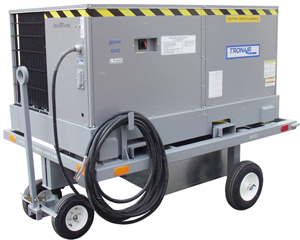
Tronair PCA Units
Tronair has been manufacturing ground support equipment since 1971. Its 4-ton units (45,000 BTUH, 1,200 to 2,000 CFM) span a wide range of electric configurations – 208V or 230V single-phase, and 208V, 230V, or 460V three-phase – as well as gas and LPG variants. Several models include integrated heating for year-round use in cold-weather environments. The lineup features built-in safety switches (high-pressure, loss-of-charge, freeze protection, and low oil shutdown), a lightweight aluminum shell, and a 25’ output hose. Compatible with most Bombardier, Gulfstream, Dassault, and Textron aircraft.
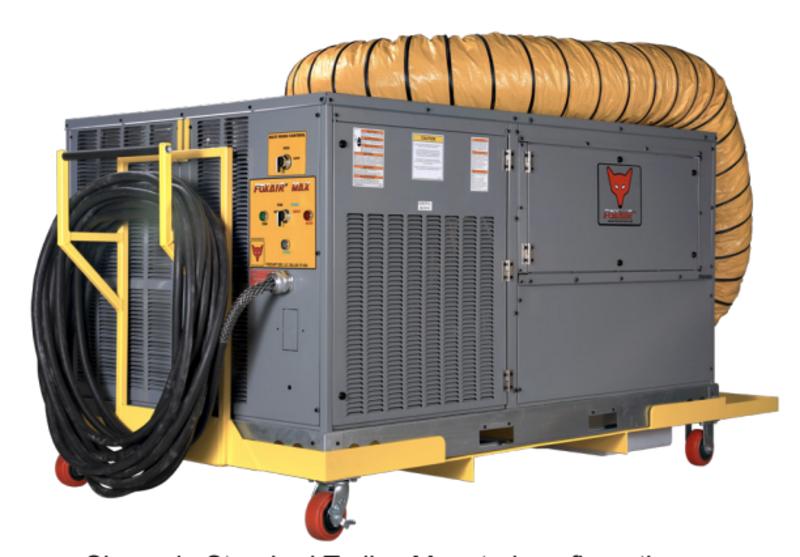
FoxCart PCA Units
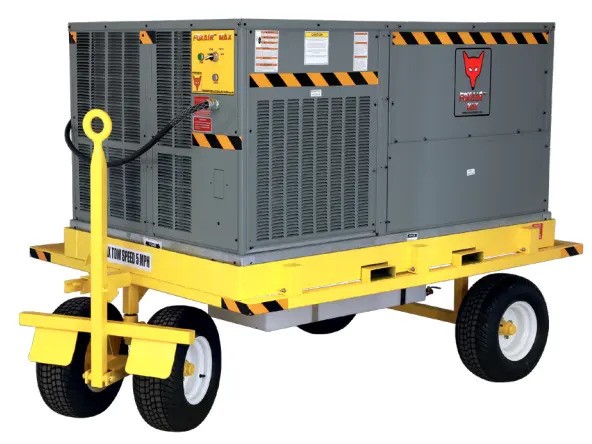
FoxCart offers a clean lineup of electrically powered options across multiple capacity tiers. The FoxAir 60 is a 2-ton unit well-suited to smaller aircraft and space-constrained operations. The FoxAir Max LP steps up to 4-ton capacity, while the FoxAir Max delivers 5-ton performance for larger airframes requiring higher airflow output.

Start Pac PCA Systems
The Start Pac BOSS Air System is a mobile HVAC unit with a heat pump design supporting both cooling and optional heating. It delivers 24,000 BTU (2 tons) at 800 to 1,231 CFM, runs at 76 dB, and operates on single-phase power from 208V to 240V. At 463 lbs on four solid wheels, the BOSS is easy to reposition across the ramp. Standard equipment includes a 50’ power cable, a patent-pending retractable 12” air delivery hose, and IP24 moisture protection.
How Do PCA Units Support Sustainability in Aviation Operations?
Reducing APU runtime is one of the most direct steps an operation can take to lower its environmental footprint. APUs emit CO2, NOx, and particulate matter – all of which contribute to airport air quality challenges and carbon reporting obligations. Replacing APU-based conditioning with electric PCA units eliminates that combustion at the point of use, delivering measurable environmental benefit alongside the operational advantages already covered. As airports face growing pressure to meet sustainability targets and adopt green ground operations programs, PCA units have become an expected part of responsible ramp management.
The Bottom Line
Pre-conditioned air units are essential for safe, efficient, and cost-effective aircraft maintenance, providing the climate control needed to protect both technicians and aircraft systems.
PJi offers a wide selection of PCA units from trusted brands like Tronair, FoxCart, and Start Pac. Reach out to our aviation specialists today by phone, email, or live chat for expert guidance on selecting the right solution for your operation.