






ACES Systems 10-100-2020HR – 2020HR ProBalancer Analyzer


Create yours now for free.

Need a Quote?
Please note this is the Analyzer ONLY.
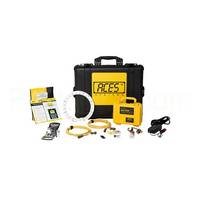
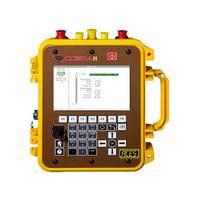
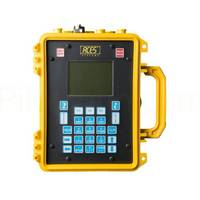
Increase your helicopter’s performance today with the ACES Systems ProBalancer Analyzer. For use on Robinson Helicopters.
For those who need a little more horsepower than the ProBalancer Sport, we offer the Model 2020HR ProBalancer Vibration Analyzer Balancer. It provides step-by-step on-screen instructions for performing propeller balancing, rotor track and balance measurements, and vibration surveys at an affordable price.
Applications:
- Dynamic propeller balance
- Rotor track and balance
- Vibration surveys
Benefits of Balancing:
- Reduce component wear
- Increase aircraft performance
- Reduce crew fatigue
- Increase safety
Model 2020 HR ProBalancer Features:
- One-shot balancing
- Automated weight placement solutions
- Stores reusable setups
- Graphic spectral display with a cursor and backlit LED screen
- Dual channel, expanded views, and simultaneous inputs
- Supports multiple sensor types
- Includes an industry-unique 5-year warranty
- Printing capability
- AvTrend software
The ACES Systems 2020 ProBalancer Analyzer includes all the vibration analyzing and balancing equipment required to improve the performance of your helicopter.
SPECIFICATIONS
| Accuracy | Vibration Amplitude: ±5%, 0-10 IPS Frequency Range: 0 to 12 KHz (720,000 RPM) per channel when collecting on both channels simultaneously OR 0 to 20 KHz (1,200,000 RPM) when collecting on a single channel Tachometer Inputs: ±0.3%, 100 to 10,000 rpm |
| Power Supply | Type: Nickel Metal Hydride (NiMH) 12V, 4.5 amp-hour internal Operation Time: 10 to 12 hours (optimum) Charging Time: 2 hours |
| Voltage | 12V DC battery or 14V to 28V DC ship’s power |
| Physical | Height: 9.3" (23.6 cm) Width: 7.5" (19.1 cm) Depth: 4.4" (11.2 cm) Weight: 4.8 lbs (2.2 kg) Operating Temperature: 32°F to 122°F (0°C to 50°C) |
| AC Input | The data acquisition system is capable of measuring AC values from 0.1 volts to 2.048 volts peak. |
| Tachometer- Synchronized Measurements |
The analyzer can use the tachometer input to synchronously sample and average data. These data contain phase information for vibration related to the tachometer. The analyzer can report phase to ±3 degrees for this vibration, which is reproducible to 1 degree. |
| Unconditioned Tachometer Input |
Tachometer signal processing electronics are capable of adjusting the full-scale input range to handle any available sensor for measuring speed. Adjustment of the tachometer conditioning electronics is performed automatically by the microprocessor and requires no user intervention. The voltage level that is used as a reference for the detection of the start of the revolution can be adjusted from 120mV to 5 volts. The tachometer circuitry can detect speeds up to 10,000 RPM. |
| Auto-Ranging Input | The analyzer auto-ranges all signal inputs based on sensor sensitivity. That way, it can determine the optimum gain setting to achieve the maximum dynamic range. Gains are adjusted by factors of two (1 to 512) for all channels. This adjustment enables the analyzer to perform each measurement without overload and with maximum accuracy. |
| Sensor Types | The analyzer will accept any vibration signal input (acceleration, velocity, or displacement). The input is then displayed as collected or integrated into another vibration unit. The vibration input will accept any voltage-generating sensor (must have an external charge converter when required). |
| Analysis Range | Data is accurately transformed from the time to frequency domain using a high roll-off, 8-pole elliptical, anti-aliasing filter with a Fast Fourier Transformer (FFT). The analyzer will perform FFT resolutions of 100, 200, 400, and 800 lines. |
| General Information | |
|---|---|
| Part # | 10-100-2020HR |
| Manufacturer | Aces Systems |
| Manual 1 | View Aces Systems 2020 Manual |
| Shipping Information | |
|---|---|
| Product Weight | 4.91 lbs. |
| Product Dimensions | 10 x 8 x 5 in. |
| Schedule B | 9031100000 |
| ECCN | 9B990 |
Customers also viewed


AIRCRAFT COMPATIBILITY
| Compatible Aircraft* |
|---|
PRODUCT REVIEWS
This item does not have any reviews yet.
QUESTIONS & ANSWERS
The ACES Systems 2020HR ProBalancer Analyzer supports a wide range of maintenance applications, including dynamic propeller balancing, vibration surveys, and rotor track and balance procedures. It can also be used for spectrum analysis to diagnose vibration sources across engines, gearboxes, and airframes. This versatility makes it a core tool for both piston and turbine-powered aircraft maintenance.
The 2020HR’s on-screen step-by-step guidance simplifies balancing procedures and allows for quick repetition of tasks. Once the setup data is saved, technicians can recall it later to perform one-shot balancing without reconfiguring the analyzer. This streamlined process minimizes aircraft downtime and increases overall maintenance efficiency.
Yes. The analyzer enables users to define and store setup information for common procedures, including RPM, propeller configuration, and sensor placement. These saved profiles can be recalled later for repeat operations, ensuring consistent and accurate balancing results across multiple aircraft.
The 2020HR records vibration data in inches per second (IPS) and guides the technician through multiple test runs until readings are below 0.07 IPS, indicating optimal balance. It also calculates trial and correction weights, displaying exact placement and weight recommendations. This automated process significantly enhances balancing precision.
The 2020HR is compatible with a wide variety of accelerometers, magnetic pickups, and phototachometers. It supports dual-channel vibration inputs, allowing simultaneous readings from multiple sensors for more detailed analysis. This flexibility ensures compatibility with various aircraft types and maintenance requirements.
Yes. The analyzer is lightweight, portable, and powered by rechargeable batteries or aircraft power, making it ideal for both hangar and ramp operations. Its rugged design and backlit graphic display ensure visibility and reliability in diverse working environments.
During operation, the 2020HR displays prompts for each step – such as starting the engine, increasing RPM, and entering weight values – so technicians can follow a precise sequence. The system automatically calculates the subsequent corrective action based on vibration measurements, ensuring safe, accurate adjustments without manual guesswork.
The 2020HR offers dual-channel, simultaneous input capability, improved data storage, and enhanced on-screen graphics compared to earlier models. Its programmable balance influence factors and spectrum analysis tools allow deeper vibration diagnostics. The analyzer also supports split-weight balancing, a feature that enables technicians to distribute correction weights across existing holes for improved precision.
By detecting and correcting propeller or rotor imbalance early, the ACES Systems 2020HR reduces airframe and engine vibration that can lead to premature component wear or fatigue. Properly balanced systems operate smoothly, improving fuel efficiency, passenger comfort, and long-term aircraft reliability.
The 2020HR features a graphical spectral display with a movable cursor and expanded view options. This visual feedback enables technicians to pinpoint vibration frequencies and magnitudes in real time, allowing for more informed troubleshooting during maintenance procedures.


