






Create yours now for free.

Need a Quote?
The CCX Technologies TER-101 GPS Signal Generator works with the T-RX RP+ All-in-One Avionics Radio and Pulse Tester to validate the GPS functionality on an aircraft.
Simple to set up and use, the GPS Signal Generator includes GPS L1 signal generation, SBAS (WAAS/EGNOS) satellite generation, dynamic position and altitude movement, and an antenna coupler, and it uses the current GPS satellite almanac.
The GPS track will be defined with a bearing and velocity from a position and MSL altitude, with optional altitude changes defined as a rate or angle. Modifications of bearing and rates are dynamic, so you could set up an approach on the navigator and “fly it” the same way you do with an ILS generator.
| General Information | |
|---|---|
| Part # | TER-101 |
| Manufacturer | CCX Technologies |
| Shipping Information | |
|---|---|
| Schedule B | 9031808080 |
| ECCN | 7B994 |
Customers also viewed

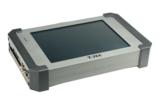
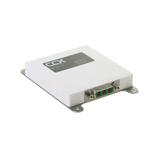
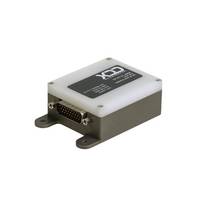

Customers who bought this item also purchased
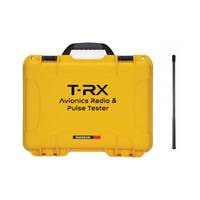
AIRCRAFT COMPATIBILITY
This item is for use on all aircraft.
PRODUCT REVIEWS
This item does not have any reviews yet.
QUESTIONS & ANSWERS
The CCX TER-101 GPS Signal Generator simulates GPS signals to support testing of aircraft GPS receivers and navigation systems without relying on live satellite signals. It’s used primarily in avionics maintenance and troubleshooting environments to verify system performance. This tool is especially helpful in hangars or test labs where GPS reception is limited or intentionally blocked. It helps technicians detect and diagnose GPS issues efficiently, reducing aircraft downtime.
The TER-101 is compatible with most GPS-equipped aircraft systems that use standard aviation GPS antennas and receivers. It supports both 1575.42 MHz (L1) and 1227.60 MHz (L2) frequencies, enabling testing across a wide range of civilian avionics systems.
However, specific aircraft configurations may require appropriate couplers or adapters, such as the CCX IK-310 GPS Antenna Coupler, to ensure proper signal injection. Always verify compatibility with OEM documentation or contact support if in doubt.
Yes, the TER-101 is designed to work in tandem with the CCX Technologies T-RX RP+ Avionics Radio and Pulse Tester. When connected, the T-RX tester can monitor system responses to the simulated GPS signals generated by the TER-101. This integration allows for streamlined testing and data logging of GPS receiver functionality, simplifying preflight inspections, return-to-service verifications, and avionics troubleshooting workflows.
The TER-101 operates using a 12V DC power supply with a typical current draw of around 300 mA. This allows it to be powered by a standard DC source available in most avionics shops or mobile test setups. The compact form factor and low power requirement make it easy to use in field environments, especially when portability is a concern.
No, the TER-101 is not designed to radiate signals into the air. Instead, it uses a direct RF output via SMA connectors or through a GPS antenna coupler (e.g., the IK-310 passive coupler) to inject signals into the GPS receiver path. This ensures safe operation by isolating the signal from external environments and preventing unintentional interference with real-world GPS receivers nearby.
To use the TER-101 effectively, technicians typically pair it with a passive GPS antenna coupler – like the IK-310 coupler offered by CCX – to interface with onboard aircraft GPS receivers. Depending on the test configuration, additional cables and RF adapters may be required. When using the device alongside the T-RX RP+, compatible connectors are included for seamless integration, but optional carrying cases or additional mounting brackets may also be useful for mobile setups.
The TER-101 connects to a GPS receiver either directly through its RF SMA output port or via a passive antenna coupler that sits between the GPS antenna and the receiver. For example, the IK-310 GPS Antenna Coupler allows signal injection without disconnecting or damaging the aircraft’s antenna cabling. Proper shielding and grounding should be ensured during setup to avoid introducing noise or reflection into the test environment.
While the TER-101 is primarily designed for single-unit testing, it can potentially be used with multiple receivers if a signal splitter and matching network are employed. However, each receiver's sensitivity and signal path must be evaluated to ensure proper signal strength and avoid mismatched impedance. For complex setups, consulting with CCX Technologies or a qualified avionics engineer is recommended.
No, the TER-101 provides a static GPS signal with fixed parameters. It does not simulate dynamic positioning, velocity changes, or satellite movement. The purpose of the signal generator is to confirm signal acquisition and GPS lock functionality – not to emulate in-flight conditions. For more advanced simulation, a full-motion GPS simulator would be required.
Yes, the TER-101 is widely used in Part 145 repair stations, MRO facilities, and OEM-approved avionics shops. It is designed to be safe, compact, and compliant with aviation maintenance standards, enabling ground-based GPS receiver testing without requiring access to live satellite signals. While not FAA-certified (since it's test equipment), it’s trusted by professional technicians worldwide.
The TER-101 is lightweight and compact, measuring just a few inches in length and width, and can easily be stored in a tool bag or maintenance kit. It’s ideal for mobile avionics teams or techs who need to perform diagnostics at the ramp, on the tarmac, or during AOG (aircraft on ground) scenarios. Its robust design ensures durability during frequent transport and field use.
The TER-101 GPS Signal Generator is operational almost immediately after power-up, typically requiring less than 10 seconds for full signal stability. This rapid startup allows technicians to run quick functional checks without significant delays. However, for optimal results, allow a few additional seconds after connection to ensure proper signal lock by the GPS receiver.
No, the TER-101 GPS Signal Generator is not a standalone device. It must be connected to the CCX Technologies T-RX RP+ Avionics Tester to function properly. The T-RX unit acts as the interface and control module, enabling the generation and simulation of GPS signals during avionics testing. Without the T-RX RP+, the TER-101 cannot transmit or simulate signals independently. This integrated setup ensures precise and reliable GPS testing across various aircraft platforms.
The TER-101 GPS Signal Generator can simulate up to six individual GPS satellite signals simultaneously. This capability allows for robust signal verification and system testing across multiple GPS channels. It's ideal for confirming receiver accuracy, functionality, and satellite acquisition under controlled conditions. If you’re interested in adding the TER-101 to your T-RX RP+ avionics tester quote, please let your PJi sales representative know at the time of request to ensure it's included in your proposal.


