






02A7874C0100 - Tronair 02A7874C0110 – 20-Ton Tripod Jack


The 02A7874C0100 is a specific part number of the series Tronair 02A7874C0110. For more generalized information on this item series or for more options, click here.

| Alternate Models | |
|---|---|
| 02A7874-0110 | Previous Model Number |
| 02A7874C0100 | Previous Model Number |
| General Information | |
|---|---|
| Part # | 02A7874C0100 |
| Manufacturer | Tronair |
| Manual 1 | View Tronair 02A7874C0110 Parts and Operation Manual |
| Shipping Information | |
|---|---|
| Shipping Weight | 890 lbs. |
| Shipping Dimensions | 62 x 59 x 51 in. |
| Freight NMFC | 186600 |
| Schedule B | 8425420000 |
| ECCN | EAR99 |
Customers also viewed
Customers who bought this item also purchased


AIRCRAFT COMPATIBILITY
| Compatible Aircraft* | |
|---|---|
| Dassault | , |
PRODUCT REVIEWS
QUESTIONS & ANSWERS
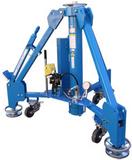
The Tronair 02A7874C0110 is designed to safely lift aircraft by the fuselage or main wings using hydraulic force. It’s commonly employed during maintenance, inspection, and repair operations requiring stable, high-capacity lifting. The jack supports loads of up to 20 tons, ensuring reliable performance for medium- and large-sized aircraft when used with the correct jack pads and in coordination with other jacks for proper balance.
The two-stage hydraulic configuration allows for a greater lifting range without increasing the overall jack height. The first stage provides the bulk of the lift, while the second stage offers additional height for precise positioning. This design delivers smooth, controlled extension and retraction, ensuring efficient aircraft lifting even in tight hangar environments.
This jack incorporates multiple safety mechanisms, including user-operated ram locknuts, a locknut retention ring, and a “hold-to-run” air valve that stops hydraulic movement when released. It also includes a CE hand pump with a check valve to prevent unintended descent in case of relief valve failure. These redundant safeguards help prevent accidents and ensure the jack remains stable under load.
Operators should always work on a clean, level surface and avoid standing under raised aircraft until the ram locknuts are fully engaged. It’s also important to raise or lower multiple jacks simultaneously to maintain level aircraft positioning. Proper use of tail or nose stands is recommended for additional stability during extended maintenance.
The recommended hydraulic fluid is MIL-PRF-5606, a non-polluting aviation-grade oil suitable for high-performance hydraulic systems. This fluid ensures smooth jack operation across a wide temperature range and is compatible with the seals and components in the Tronair system. Always consult the included Safety Data Sheet (SDS) for safe handling and disposal guidelines.
Tronair recommends a 90-day preventative inspection and a 12-month load test for optimal performance. Regular maintenance includes checking hydraulic fluid levels before each use, lubricating casters quarterly, and performing a capacity test annually at 105% to 110% of the rated load. Worn seals or damaged components should be replaced immediately to prevent fluid leaks and maintain reliability.
Yes, the jack can be stored outdoors if protected by a full-coverage waterproof tarp or canvas. For long-term storage, it should be kept on a level surface with the ram fully retracted and stored between -4°F and 122°F (-20°C to 50°C). These precautions help prevent corrosion and preserve hydraulic integrity during periods of inactivity.
The jack can be moved by hand using its built-in casters or lifted via a crane using a strap through the top of the tripod. It can also be transported by forklift, placed under the lower tripod support. The unit weighs approximately 645 lbs (293 kg), so proper handling equipment and strapping are essential to prevent movement or damage during shipment.
The pneumatic system operates efficiently at an air pressure range of 90 to 100 PSI (6.21 to 6.89 bar). Supplying air within this range ensures consistent hydraulic response and prevents overloading the internal components. Using regulated, clean air sources also helps extend the life of the Haskel pneumatic pump assembly.
The 02A7874C0110 operates effectively in environments ranging from -4°F to 122°F (-20°C to 50°C) and remains non-polluting when properly maintained. Its durable design and corrosion-resistant materials make it suitable for both hangar and ramp use, provided surfaces are dry and level. Following environmental guidelines ensures consistent hydraulic and mechanical performance.
The ram locknut is a key safety component that prevents unintentional descent in the event of hydraulic pressure loss. Operators must always lower the locknut while lifting and ensure it remains within one inch of the ram base during operation. Proper use of the locknut significantly reduces the risk of aircraft damage or injury to technicians.
Tronair warrants the 02A7874C0110 jack against manufacturing and material defects for a period of one year from the date of shipment. Replacement parts are covered for 90 days, and service must be performed by authorized personnel to maintain coverage. For support, users can contact Tronair for technical assistance, return authorizations, or replacement components.


