





Create yours now for free.

Need a Quote?
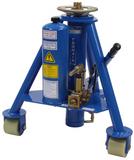
The Tronair 02-7810C0111 is a 12-Ton (24,000 lb) hydraulic aircraft tripod jack engineered to lift aircraft from the forward fuselage or main wing jacking points during maintenance, inspections, and ground operations. With a 51" (129.5 cm) closed height and 97" (246.4 cm) maximum extended height, it accommodates a range of aircraft fuselage and wing jacking point heights. CE-marked for compliance with European aviation safety standards. OEM-specified for Fokker 100, 70.
Standard Features
- Hand pump with built-in pressure relief valve
- Threaded rams with improved handwheel-style safety nut
- Quick-rising center extension for rapid initial lift
- Easy-access filler/breather cap
- Heavy-duty wheels for easy maneuverability
- Hydraulic fluid: MIL-PRF-5606
- ¾" (2 cm) spherical radius cup jack pad
- CE marked
- Durable powder-coat finish (Tronair Blue)
Technical Specifications
- Rated Capacity: 24,000 lbs (10886 kg)
- Operating Temperature: −4°F to 122°F (−20°C to 50°C)
- Pressure Relief Setting: 2,500 + 250/−0 PSIG (172.4 + 17.2/−0 bar)
- Minimum Closed Height: 51" (129.5 cm)
- Maximum Height Obtainable: 97" (246.4 cm)
- Hydraulic Fluid: MIL-PRF-5606
- Jack Pad: ¾" (2 cm) spherical radius cup
- Finish: Durable powder coat (Tronair Blue)
Safety Features
- Ram Lock Nut: Prevents the lowering of the ram. The ram lock nut must be lowered as the aircraft is being lifted. Ram lock nuts must be kept within 2" of the stop while raising the aircraft.
- Lock Nut Retention Ring: Prevents the lock nut from being unscrewed from the second stage.
- Pressure Relief Valve: Prevents overload during raising operations.
Aircraft Applications
The 02-7810C0111 is OEM-approved for the following aircraft types:
- Fokker: 100, 70
This list reflects aircraft for which the manufacturer has specifically approved this jack. Additional applications may be possible — always confirm jacking capacity, adapter requirements, and placement procedures with the aircraft maintenance manual before use.
Need your Tronair 02-7810C0111 12-ton tripod jack serviced, repaired, or load tested?
Pilot John is an authorized Tronair distributor and factory-authorized Tronair service center. Every jack ships new from our warehouse with Certificates of Conformance (CofC) and FAA Form 8130-3 documentation available at no additional cost. Need jack service, load-testing, or repair? Pilot John handles that too as an OEM-trained GSE service center. For more information or to request service, see our Service Center page, and see our article on why jack load testing matters. Pilot John also operates an ISO-17025 calibration center for all of your tooling and equipment calibration needs — learn more here.
Also Available
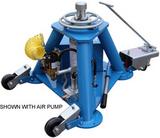
- With factory-installed air pump: Tronair 02A7810C0111
| Alternate Models | |
|---|---|
| 02-7810-0111 | Previous Model Number |
| General Information | |
|---|---|
| Part # | 02-7810C0111 |
| Manufacturer | Tronair |
| Shipping Information | |
|---|---|
| Freight NMFC | 186600 |
| Schedule B | 8425420000 |
| ECCN | EAR99 |
| Spare Parts | |
|---|---|
| G-1318-1033 | PIN, 5/8 X 3.3 LG MODEL D |
| H-2331 | NUT, 12 TON STOP |
| H-2395 | COVER, PROTECTIVE JACK |
| HJ-225-04 | SHAFT, EXTENSION |
| HJ-536 | RING, RAM PROTECTION |
| HJ-557 | PAD, JACK |
| K-1001 | KIT, REPL. HAND PUMP SEAL |
| K-1043-18 | KIT, AIR PUMP (P) |
| K-1050 | KIT, REPL. SEAL, RAM |
| K-1106 | KIT, MANIFOLD ASSY |
| K-1685 | KIT, REPAIR FLUID SEAL |
| K-1686 | KIT, REPAIR AIR SEAL |
| K-2800 | KIT, CASTER REPLACEMENT |
| K-3481 | KIT, JACK WELDMENT (P) |
Customers also viewed
Customers who bought this item also purchased
AIRCRAFT COMPATIBILITY
| Compatible Aircraft* | |
|---|---|
| Fokker | 100 , 70 |
PRODUCT REVIEWS
This item does not have any reviews yet.
QUESTIONS & ANSWERS
A tripod jack provides greater stability than single-post or axle jacks by distributing the load across three points of contact. This design reduces the risk of tipping, especially when lifting taller aircraft or working on nose landing gear. The wide base radius helps maintain balance during lifting and lowering operations. This makes tripod jacks a preferred choice for maintenance environments where stability and safety are critical.
Correct placement of the locking pin ensures the mechanical extension is securely supported during lifting operations. The manual emphasizes that the locking pin must be fully seated in the ram protection ring groove to prevent unintended movement or collapse. Improper placement can lead to deformation or failure of the pin. Following proper procedures significantly reduces the risk of equipment failure under load.
When lifting an aircraft with multiple jacks, raising them simultaneously helps maintain proper weight distribution and aircraft balance. Uneven lifting can introduce stress on the airframe or landing gear components. The operating instructions specifically note that all jacks should be raised and lowered together to keep the aircraft level. This practice improves safety and prevents structural damage.
The hydraulic system uses a single-acting cylinder combined with a pressure relief valve to deliver a controlled lifting force. The hydraulic schematic shown in the appendix illustrates how fluid flows from the reservoir through the pump to the cylinder for consistent operation. This design allows technicians to achieve gradual, precise lifting without sudden movements. Smooth operation is essential when working on sensitive aircraft components.
Before using the tripod jack, operators should inspect all fittings, fasteners, and hydraulic fluid levels. The manual recommends verifying that the fluid is approximately 1.5” below the vent when the ram is fully collapsed. Checking for loose hardware or visible damage helps prevent operational issues. These simple inspections support safe and dependable performance during aircraft maintenance.
Routine maintenance helps protect internal components from wear, corrosion, and contamination. The manual recommends cycling the jack every 90 days, even when not in regular use, to keep the seals lubricated and prevent rust buildup. Cleaning and protecting exposed surfaces also helps maintain proper function. Consistent maintenance reduces downtime and extends equipment service life.
Exposure to cleaning chemicals, dirt, or debris can damage seals and internal components if they enter the hydraulic system. The manual specifically advises covering the jack during washing or cleaning procedures to prevent contamination. Protecting the equipment helps maintain seal integrity and hydraulic performance. This is especially important in busy hangar environments.
Proper training ensures that technicians understand correct operating procedures, safety precautions, and maintenance requirements. The manual states that employers are responsible for providing sufficient training programs for safe jack operation. Well-trained operators are less likely to misuse equipment or overlook critical safety steps. This leads to more efficient workflows and reduced risk during aircraft maintenance tasks.


