






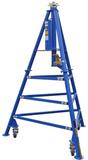
02A7838C0110 - Tronair 02-7838C0110 – 5-Ton Tripod Jack


Create yours now for free.
The 02A7838C0110 is a specific part number of the series Tronair 02-7838C0110. For more generalized information on this item series or for more options, click here.

Need a Quote?
| Alternate Models | |
|---|---|
| 02-7838-0110 | Previous Model Number |
| 02A7838C0110 | Air Pump Installed (CE) |
| General Information | |
|---|---|
| Part # | 02A7838C0110 |
| Manufacturer | Tronair |
| Manual 1 | View Tronair 02-7838C0110 Manual |
| Shipping Information | |
|---|---|
| Shipping Weight | 155 lbs. |
| Shipping Dimensions | 27 x 25 x 27 in. |
| Freight NMFC | 186600 |
| Schedule B | 8425420000 |
| ECCN | EAR99 |
Customers also viewed
Customers who bought this item also purchased
AIRCRAFT COMPATIBILITY
| Compatible Aircraft* | |
|---|---|
| Hawker Beechcraft |
T-6A Texan II
NOTE
This jack is used on the aircraft's main and nose landing gear. Two main jacks and one nose jack are required per aircraft.
|
| Pilatus |
PC-9
NOTE
This jack is used on the main and nose landing gear. Two main jacks and one nose jack are required per aircraft.
|
PRODUCT REVIEWS
This item does not have any reviews yet.
QUESTIONS & ANSWERS
Proper placement of the locking pin is essential to safely secure the mechanical extension during lifting. The operation manual emphasizes that the locking pin must be positioned through the ram protection ring groove, with the washer and ball lock correctly located outside the ring. Incorrect placement can lead to component deformation or premature failure under load. Following proper pin placement procedures ensures safe and reliable aircraft lifting.
The ram protection ring helps maintain the mechanical extension's structural integrity during lifting. It ensures the locking pin is properly supported and prevents damage from improper load distribution. Incorrect positioning can result in deformation and unsafe conditions. This feature plays a critical role in maintaining safe operation under load.
When multiple tripod jacks are used, they must be raised and lowered together to keep the aircraft level. Uneven lifting can create structural stress and increase the risk of instability. The manual specifically instructs operators to always raise and lower jacks simultaneously for safe operation. This practice helps ensure balanced and controlled aircraft maintenance.
The built-in pressure relief system helps prevent the jack from being overloaded during lifting operations. Limiting hydraulic pressure reduces the risk of component failure or sudden load release. The manual lists a preset pressure relief value to maintain safe operating limits. This feature is essential for protecting both the equipment and the aircraft.
Before use, technicians should inspect the jack for proper fluid levels, secure fittings, and any visible damage. The manual recommends verifying that the hydraulic fluid is at the correct level and checking for leaks or loose components. It also advises ensuring that all parts are present and properly installed. Performing these checks helps prevent operational issues and enhances safety.
Maintaining the correct level of MIL-PRF-5606 hydraulic fluid ensures smooth and consistent jack operation. Low or contaminated fluid can cause erratic movement or reduced lifting capability. The manual specifies checking fluid levels with the ram fully retracted to ensure accuracy. Proper fluid maintenance supports reliable performance and extends equipment life.
The jack is intended for use by trained aircraft maintenance technicians familiar with proper jacking procedures. The manual states that operators must understand both the equipment and the aircraft-specific lifting requirements. Proper training helps reduce the risk of misuse and ensures safe, efficient operation. It is a critical component of overall aviation safety.
The jack should be used on a clean, dry, and level surface to ensure stability during lifting. The manual also specifies an operating temperature range of -4°F to 122°F for optimal performance. Operating within these conditions helps maintain consistent hydraulic function. It also reduces the risk of equipment damage or instability.
For proper storage, the jack should be kept with the ram fully retracted and stored in a clean, dry environment. The manual notes that it can be stored outdoors, provided it is covered with a waterproof tarp to protect against moisture and debris. Maintaining appropriate storage conditions helps prevent corrosion and extends service life. Proper storage also ensures the jack is ready for use when needed.


