






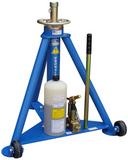
02-7863-0100 - Tronair 02-7863C0100 – 12-Ton Axle Jack


The 02-7863-0100 is a specific part number of the series Tronair 02-7863C0100. For more generalized information on this item series or for more options, click here.

| Alternate Models | |
|---|---|
| 02-7863-0100 | Previous Model Number |
| General Information | |
|---|---|
| Part # | 02-7863-0100 |
| Manufacturer | Tronair |
| Shipping Information | |
|---|---|
| Shipping Weight | 71 lbs. |
| Shipping Dimensions | 35 x 17 x 15 in. |
| Freight NMFC | 186600 |
| Schedule B | 8425420000 |
| ECCN | EAR99 |
Customers also viewed
Customers who bought this item also purchased


AIRCRAFT COMPATIBILITY
| Compatible Aircraft* | |
|---|---|
| Bombardier |
Challenger 300
NOTE
Nose and main landing gear jack pads are included.
,
Challenger 350
NOTE
Nose and main landing gear jack pads are included.
|
| Embraer |
Legacy 450
NOTE
Nose and main landing gear jack pads are included.
,
Legacy 500
NOTE
Nose and main landing gear jack pads are included.
,
Praetor 600
NOTE
Nose and main landing gear jack pads are included.
|
| Piaggio |
P-180 Avanti
NOTE
Nose and main landing gear jack pads are included.
|
PRODUCT REVIEWS
QUESTIONS & ANSWERS
The Tronair 02-7863C0100 is used to lift an aircraft's landing gear to support maintenance tasks, such as inspections, tire and brake work, and other service operations. This type of aircraft axle jack provides a stable lifting capacity for properly supported ground maintenance procedures. It is designed for routine maintenance, repairs, and other ground operations where safe, controlled lifting is required.
This jack has a maximum vertical capacity of 24,000 lbs (12 tons / 10.8 metric tons), meaning it is rated to lift and hold loads up to that limit when used correctly. Capacity should never be exceeded, and technicians should always follow the Aircraft Maintenance Manual (AMM) for approved jacking procedures. Using the correctly rated aircraft jack helps reduce the risk of equipment damage and improves safety during maintenance.
Proper placement helps ensure the jack contacts the approved jacking point evenly and prevents shifting under load. The manual specifically instructs placing the axle jack on a hard, level surface and using extensions/spacer blocks to position the ram as close as possible to the jack pad before lifting. Correct placement supports aircraft stability and reduces the chance of unsafe lifting conditions.
Before use, the jack should be checked for tight hardware, missing parts, and proper hydraulic fluid level with the rams fully collapsed. The manual also recommends verifying all parts are present using the illustrated parts list and replenishing with MIL-PRF-5606 hydraulic fluid as required. These checks help prevent lifting failures and reduce the risk of hydraulic leakage during operation.
The operating instructions state that technicians should always open the reservoir vent screw before operating the jack. Venting helps ensure proper hydraulic function and reduces the chance of pressure-related issues that can affect lifting performance. Failing to take this step can also contribute to troubleshooting symptoms, such as the inability to lift or support a load.
The manual warns operators to never place hands between the aircraft and the jack pad, and to chock the aircraft tires on the landing gear not being raised. These precautions help reduce pinch hazards and prevent unexpected movement of the aircraft. Safe aircraft jacking also requires trained personnel, proper control of the work area, and strict adherence to aircraft maintenance procedures.
Spacer blocks and mechanical extensions help bring the ram close to the jack pad before pumping, thereby improving stability and reducing unnecessary ram travel. For the 02-7863C0100, the parts list indicates that the included spacer blocks (such as 1/2" and 3/4" base blocks) are dependent on the model configuration. Using the right setup helps technicians achieve the correct starting height and safer lifting geometry.
The troubleshooting table highlights common causes such as a release valve not fully closed, a low hydraulic fluid level, a closed vent screw, or leakage at check valves. If the jack fails to lift or hold, technicians should follow the manual’s troubleshooting guidance and avoid continuing use until the issue is resolved. Addressing the root cause helps prevent unsafe lifting and protects the aircraft and maintenance personnel.
The service instructions include a specific bleed procedure: open the reservoir vent screw, pump the unit to its fully extended height, turn the jack upside down, and then push the jack back to its fully collapsed position. Removing air helps restore consistent lifting performance and prevents spongy or uneven operation. Following the manufacturer’s bleed steps also supports long-term hydraulic reliability.
Tronair advises maintaining a clean work area, replacing O-rings and backup rings once removed, and thoroughly flushing the system of old hydraulic fluid and contaminants before refilling it with clean hydraulic fluid. The manual also emphasizes that the jack must not be modified without written approval and that only OEM replacement parts should be used. Routine inspection and preventative care help reduce leakage, improve service life, and support safe lifting.
The manual’s function load test procedure calls for applying a test load equal to the jack’s rated capacity plus 10% (without exceeding that load), and it states that capacity testing should be performed annually. The maintenance schedule also reinforces periodic inspection intervals and annual load testing to confirm safe performance. Regular load testing supports compliance and helps verify continued safe lifting capability.
Tronair lists recommended spares, including the K-1508 Hydraulic Pump Seal Replacement Kit, K-2779 Cylinder Seal Replacement Kit, and K-3772 Hand Pump Replacement Kit. Keeping these kits available can help reduce downtime if seals wear, leaks develop, or pump service is required. Using OEM parts supports safe operation and helps maintain warranty compliance.
A seized cylinder with blown seals requires complete disassembly, seal kit replacement, and inspection of the cylinder bore for scoring or damage. The cylinder must be cleaned and honed if scoring is present, then reassembled with new seals. A load test must be performed after repair before the jack is returned to service. This type of repair should be performed at Pilot John International's authorized Tronair service facility.


