






Best Aviation Battery Charger/Analyzers: A Side-By-Side Comparison
Key Takeaways
- An aircraft battery charger/analyzer goes beyond simply restoring charge – it validates whether a battery can reliably deliver power under load, helping maintenance teams confirm serviceability, support compliance, and prevent battery-related failures before they impact operations.
- Battery chemistry – lead-acid, Ni-Cd, lithium-ion, and backup power supplies – directly affects the appropriate charge profile and test method, making it essential to select a charger/analyzer that matches the specific battery types in your operation.
- Critical safety features to look for include reverse polarity protection, overcharge and overheating prevention, short-circuit protection, and temperature monitoring with automatic shutoff.
- The top-rated battery charger/analyzer platforms each serve a distinct use case – the ATEQ BCA for broad versatility, the Christie RF80-M for touchscreen usability and high-traffic shop workflows, the Lamar CA-1550 for proven reliability and straightforward operation, and the ShockBox Complete EBACS for backup power supplies and smaller operations.
- Not every operation requires a combination charger/analyzer – single-function chargers, capacity analyzers, and battery maintainer/desulfators can be the right fit when workflows already include separate equipment or when a full battery shop setup isn't needed.
- Pilot John International carries aviation battery chargers, analyzers, and combination charger/analyzers from leading brands including ATEQ Aviation, Christie, Lamar Technologies, ShockBox, Teledyne Gill, and BatteryMINDer.
Aircraft batteries support critical systems, including engine starting, avionics backup, and emergency power, making battery maintenance a top priority for both safety and reliability. With the proper servicing approach, maintenance teams can reduce downtime, improve dispatch reliability, and extend aircraft battery life.
Because aircraft batteries vary by chemistry, capacity, and testing requirements, the battery charger/analyzer you use matters just as much as the battery itself. In this article, we’ll cover what makes a charger/analyzer essential, what to look for when selecting one, and how leading solutions from ATEQ Aviation, Christie, Lamar Technologies, and ShockBox compare in a side-by-side breakdown.
What Does a Battery Charger/Analyzer Do in Aircraft Battery Maintenance?
A standard battery charger replenishes energy, but an aircraft battery charger/analyzer goes further by testing performance and validating whether a battery can reliably deliver power under load. In other words, a charger restores charge, while a charger/analyzer helps you confirm whether your airplane battery is still serviceable, compliant, and dependable for real-world operation.
For maintenance teams, consistent charging and testing help reduce surprises, prevent dispatch delays, and avoid battery-related failures that can impact safety. Many aircraft batteries must meet specific performance thresholds and testing intervals, and a charger/analyzer supports these requirements through structured charge/discharge cycles and repeatable results. Over time, using the right battery analyzers can extend battery life, reduce avoidable replacements, and keep operations running smoothly.

Why Does Battery Chemistry Matter When Selecting a Charger/Analyzer?
Not all aircraft batteries behave the same during charge and discharge cycles, and battery chemistry affects the appropriate charge profile, test method, and required safety protections. Selecting a battery charger/analyzer that matches your battery mix helps prevent improper servicing and supports consistent, compliant results across your battery maintenance program.
Sealed and Vented Lead-Acid Aircraft Batteries
Widely used in general and business aviation, lead-acid batteries require controlled charging to help prevent overcharge damage and premature capacity loss. A charger/analyzer that supports repeatable charge/discharge cycling and capacity verification can also help identify sulfation-related degradation and maintain battery performance within performance standards.
Nickel-Cadmium (Ni-Cd) Aircraft Batteries
Ni-Cd aircraft batteries remain common in turbine aircraft and many fleet operations. They often require structured maintenance routines, including conditioning cycles and capacity checks. Because Ni-Cd chemistry behaves differently from lead-acid, many teams prioritize charger/analyzer systems that support Ni-Cd-specific charging modes and consistent discharge testing.
Lithium-Ion Aviation Battery Systems
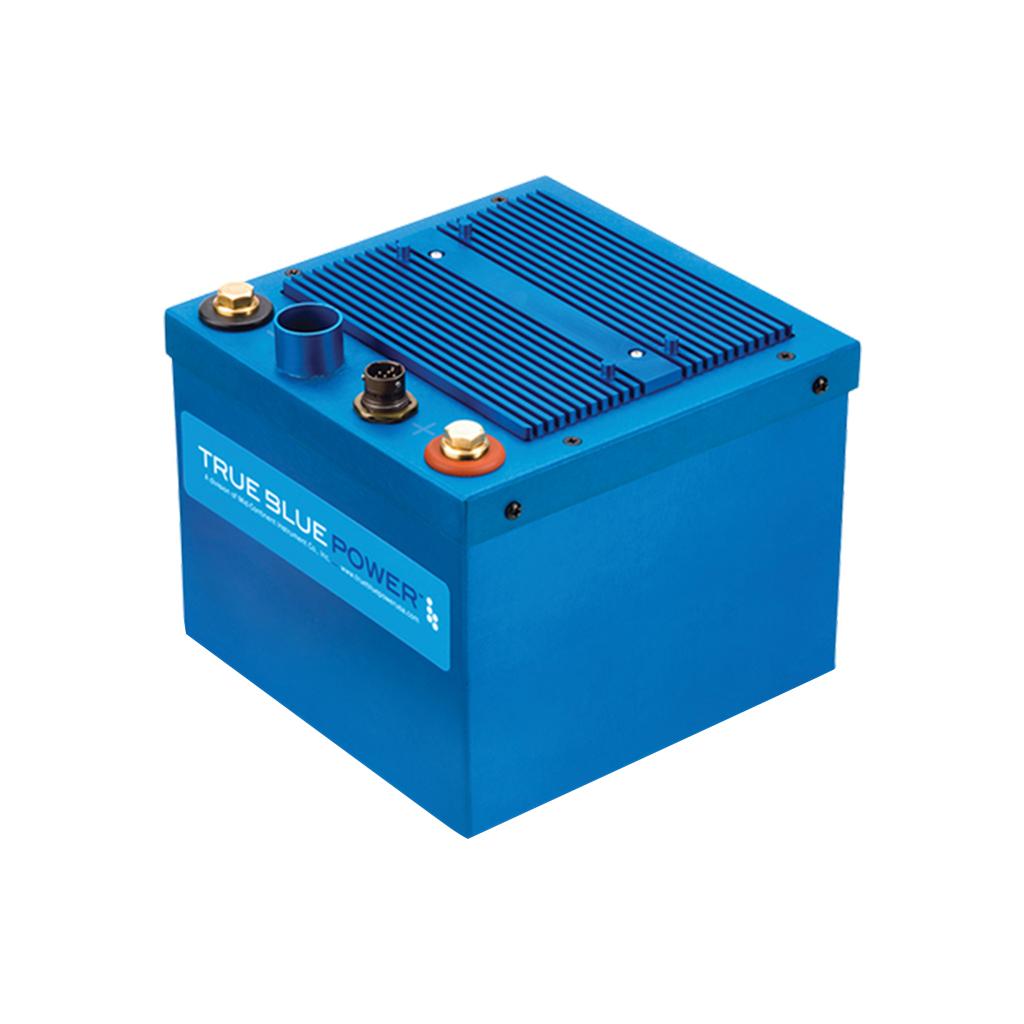
Lithium-ion batteries are becoming more common across certain aircraft platforms and STC-based installations. However, they typically require specialized charge management, monitoring, and safety controls. If lithium is part of your battery inventory, it’s especially important to use an aviation battery charger/analyzer designed for lithium-appropriate charging logic and risk mitigation.
Backup Power Supplies and Emergency Batteries
Some aircraft rely on multiple backup power supplies from different manufacturers, each with its own testing intervals and load requirements. In addition to capacity testing, many of these batteries require verification of discharge behavior under specific conditions. That’s where advanced analysis functions – such as discharge slope validation and constant resistance testing – can play a vital role in supporting compliance and safety.
What Safety Protections Should an Aircraft Battery Charger/Analyzer Include?
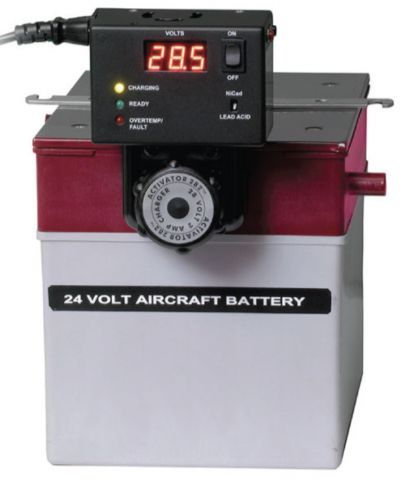
Battery servicing involves high current, heat, and potential hazard exposure, so safety protections are non-negotiable. The best aviation battery chargers and battery analyzer systems include safeguards that help reduce technician risk while preventing damage caused by incorrect setup or uncontrolled charging.
Reverse Polarity Protection
Accidentally connecting leads backward is a common servicing mistake. A charger/analyzer with reverse polarity protection helps prevent damage to the charger, the battery, and nearby equipment when connections are reversed.
Overcharge and Overheating Prevention
Intelligent charging profiles and controlled shutoff help reduce the risk of overcharge, which can shorten battery life and create unsafe heat buildup. This is especially important when charging aircraft batteries used for emergency systems, where reliability is critical.
Short-Circuit Protection
Short-circuit protection helps protect both the technician and the charger/analyzer in the event that leads are shorted or an internal fault occurs. This is especially valuable in active shop environments where batteries are moved frequently and connected repeatedly.
Temperature Monitoring and Shutoff
Temperature monitoring helps detect abnormal heat behavior during battery charging and discharging. When paired with automatic shutoff, it supports safer test cycles and reduces the risk of battery damage or thermal runaway during longer charge/discharge routines.
Ventilation and Thermal Management Considerations
Charging and discharging can generate significant heat. Depending on chemistry, venting may also occur. Proper airflow, safe setup practices, and equipment designed to manage heat effectively all contribute to safer aircraft battery maintenance in real-world environments.
What Diagnostic Features Should Battery Analyzers Include?
Charging is only part of the equation – the real value of battery charger/analyzers lies in their diagnostic capability. Functions such as capacity testing, automated cycling, discharge curve validation, and reporting help teams identify weak aircraft batteries before they cause downtime or failed tests.
Capacity Testing and Pass/Fail Logic
Capacity testing verifies whether an aircraft battery can maintain voltage under a specified load for the required time. Pass/fail logic helps technicians quickly determine whether a battery meets performance thresholds or requires conditioning, replacement, or removal from service.
Multi-Stage Charge/Discharge Cycles
Many advanced battery analyzers support multi-step routines that may include charge, discharge, rest, and repeat cycles. These structured processes help simulate real maintenance requirements while improving consistency compared to manual testing.
Discharge Curve and Slope Validation
Some batteries – especially emergency and backup systems – require verified discharge slope behavior to confirm performance under load. Tools that support slope verification help maintenance teams meet battery-specific testing requirements with greater confidence and fewer repeat cycles.
Resistance Monitoring
Internal resistance can be an early indicator of battery health degradation. When supported by the charger/analyzer, resistance monitoring helps flag batteries that may appear charged but still struggle under load due to internal wear or aging.
Data Logging and Reporting
Modern battery charger/analyzers may include data capture for maintenance tracking and compliance documentation, where available by model or configuration. Logging test results also supports trend analysis, helping teams spot recurring issues and plan replacements more proactively.
What Operational Considerations Matter When Choosing a Battery Charger/Analyzer?
Operational realities are just as important as technical features when selecting a battery charger/analyzer. Portability, integrated charging capability, interface design, and overall workflow fit can all affect how efficiently your team services aircraft batteries – whether you’re working in a dedicated battery shop, an MRO environment, or a flight department hangar. These practical factors often determine whether a charger/analyzer becomes an everyday tool or a specialized unit that only gets pulled out when needed.
Portability and Footprint
If battery testing is conducted across multiple locations, portability becomes a major advantage. A smaller footprint can also be beneficial in hangars and shops where bench space is limited and equipment must be moved between work areas.
Internal vs. External Charging Systems
Some charger/analyzer systems include built-in charging capability, while others rely on external power supplies or supporting equipment. A self-contained unit can simplify setup and reduce connections, which is especially useful when teams want a streamlined, repeatable process on a single platform.
Ease of Use
A user-friendly interface supports consistency, especially in high-traffic environments or when multiple technicians share the same equipment. Touchscreen controls can reduce training time, while manual controls may appeal to teams that prefer straightforward operation with minimal menu navigation.
Single Battery vs. Multi-Battery Workflow
Some operations test one battery at a time, while others manage multiple batteries daily. Choosing a system that matches your throughput needs helps prevent bottlenecks, improve turnaround speed, and support a more consistent servicing cadence.
Field Use vs. Battery Shop Use
Some charger/analyzers are built for flight line portability, while others are better suited for stationary battery shop use. The right choice depends on whether you need mobile testing capability, higher throughput, or a tool that integrates with a dedicated battery maintenance program.
What Are the Top Aviation Battery Charger/Analyzers on the Market?
Now that we’ve covered what these systems do, why battery chemistry matters, and which safety, diagnostic, and workflow factors should guide your decision, let’s take a closer look at the top models maintenance teams rely on to charge, test, and analyze aircraft batteries.
Below is a side-by-side comparison of four highly regarded battery charger/analyzer solutions, highlighting what each unit is best suited for and which teams benefit most from each platform.
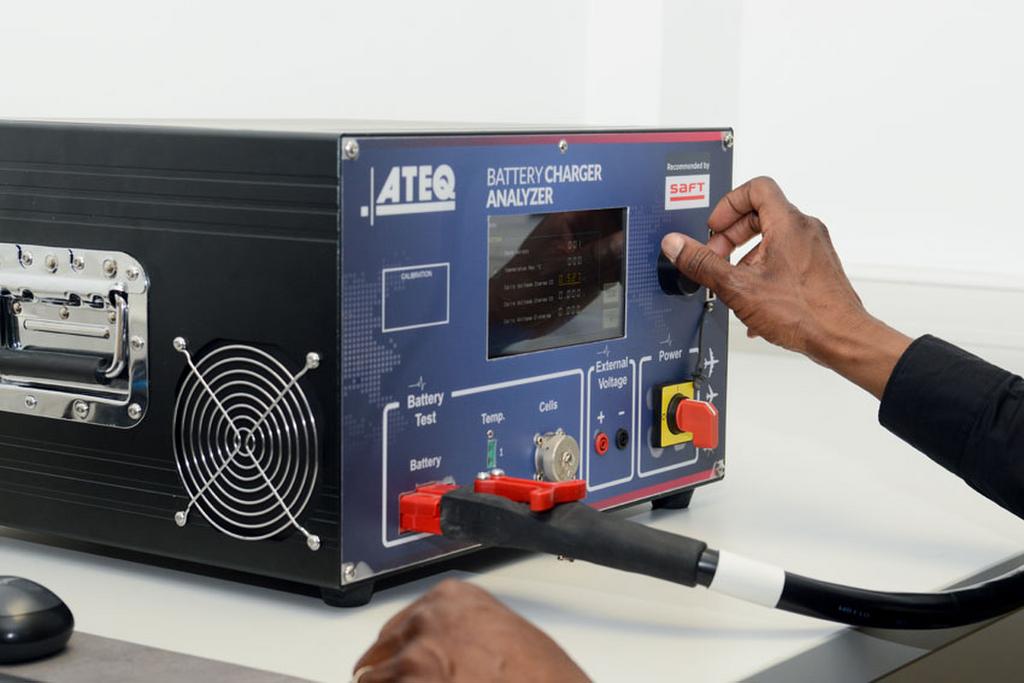
ATEQ BCA Battery Charger/Analyzer: Best for Broad Versatility
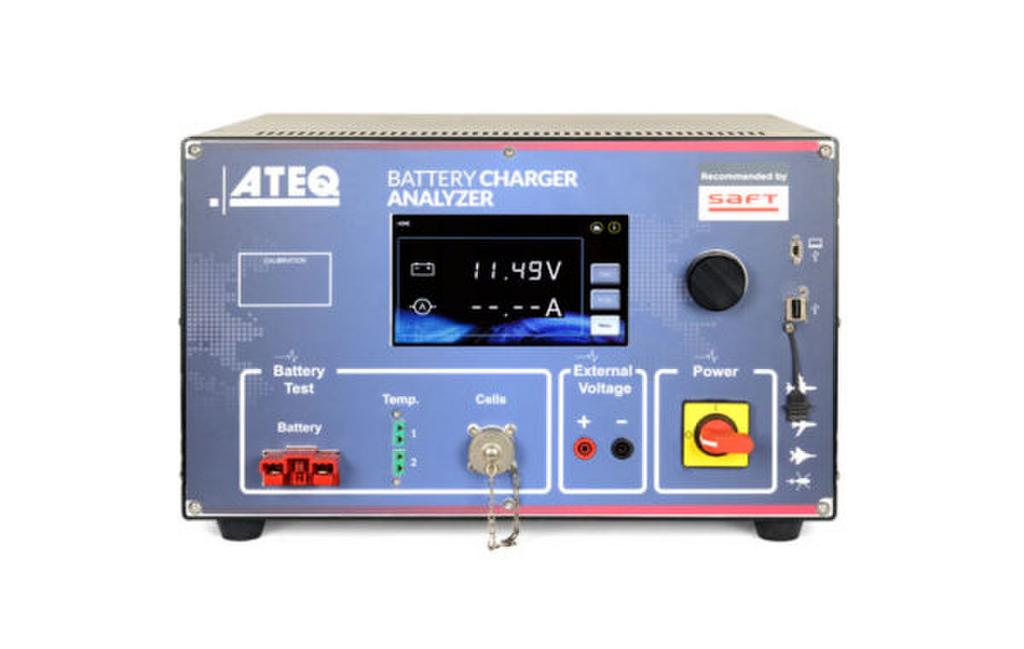
The ATEQ BCA is a versatile battery charger/analyzer designed for advanced testing while still supporting efficient day-to-day workflows. It’s often viewed as a strong, general-purpose option for teams that want modern diagnostic capabilities without a complex learning curve.
One key advantage of the BCA is its built-in charging system, which enables technicians to handle charging and testing routines without relying on separate external charging equipment.
The unit also supports discharge slope verification, which is valuable for programs that must validate performance behavior for certain aviation batteries and emergency power systems. That blend of flexibility and diagnostic depth makes the ATEQ BCA well-suited for MROs, flight departments, and battery maintenance programs with a diverse battery inventory.
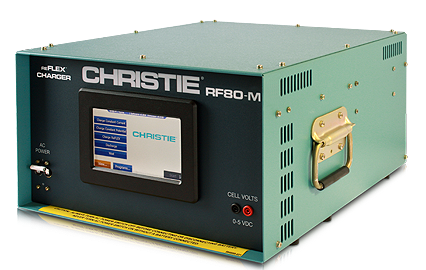
Christie RF80-M: Best for Touchscreen Usability and Shop Workflows
The Christie RF80-M is a modern aircraft battery charger/analyzer built to support repeatable maintenance routines in high-traffic environments. Its most recognizable advantage is the touchscreen interface, which simplifies setup, reduces training time, and improves consistency across multiple technicians.
For battery shops and teams managing frequent test cycles, the RF80-M supports structured workflows where usability matters almost as much as raw capability. Guided operation and streamlined controls can reduce process variation, especially when multiple users rely on the same system throughout the day.
If your operation runs on standardized procedures and a steady testing tempo, the RF80-M is often selected for its ability to keep battery servicing organized, efficient, and repeatable.

Lamar Technologies CA-1550: Best for Proven Reliability and Straightforward Operation
The Lamar Technologies CA-1550 is a self-contained battery charger/analyzer designed for charging and discharge capacity testing across common aviation battery types. It supports 12/24V lead-acid and Ni-Cd batteries and includes both constant-voltage and constant-current charging capabilities, providing technicians with flexibility across various servicing procedures.
The CA-1550 is frequently favored for its straightforward operation, since it’s designed to work without requiring a computer or extensive programming. That makes it a practical option for teams that want dependable performance, a simpler learning curve, and minimal workflow friction.
With a footprint that supports either portable use or bench setups, it fits well in hangar environments and dedicated battery servicing areas. It’s also available in commercial (CML) and military (MIL) versions, allowing operators to match the unit to their operating conditions and durability requirements.
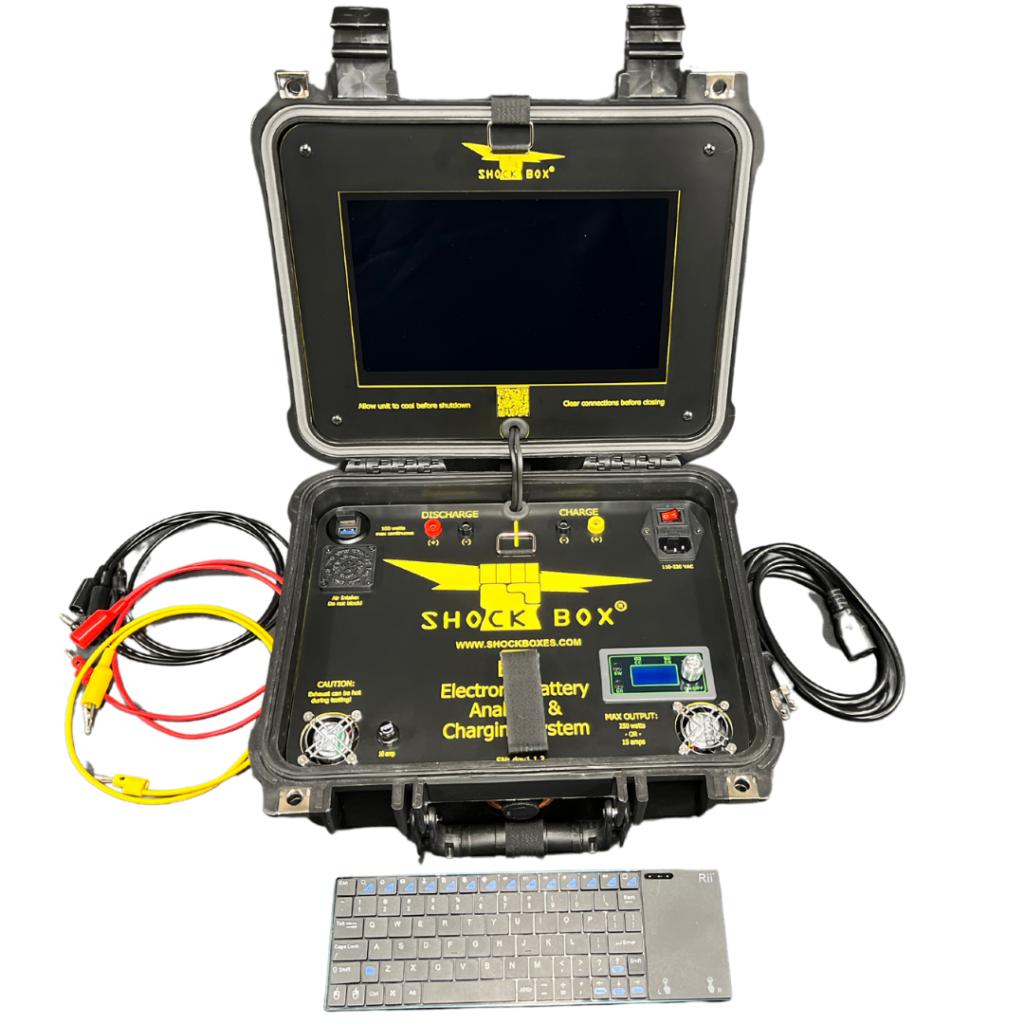
ShockBox Complete EBACS: Best for Backup Power Supplies and Smaller Shops
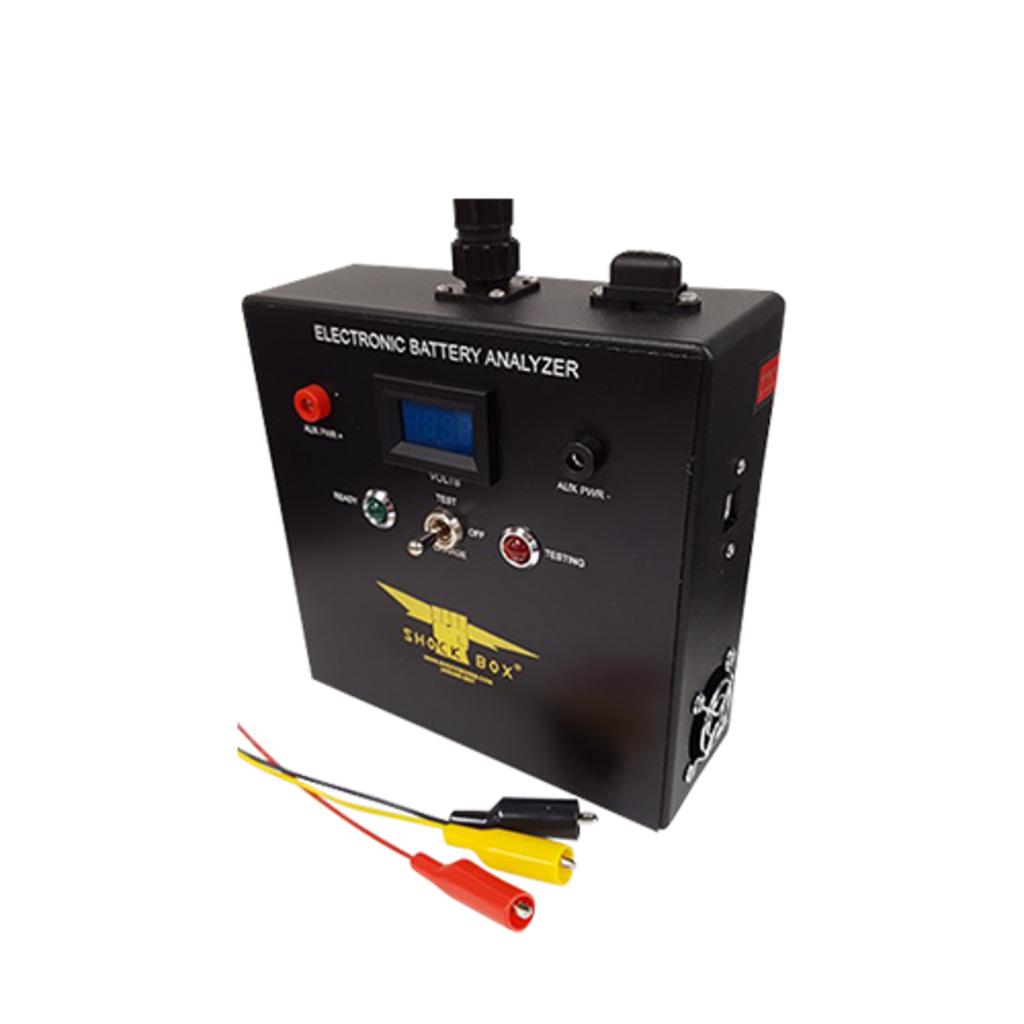
The ShockBox Complete EBACS (Electronic Battery Analyzer & Charging System) is a compact solution designed for testing smaller emergency power supplies and backup batteries, and it is not intended for larger-capacity main ship batteries. Its ease of use and lower price point make it a strong option for flight departments and smaller shops looking to bring battery testing in-house without building a fully equipped battery shop.
The EBACS supports discharge slope verification and constant resistance testing, which are important for backup power supply requirements that require specific load behaviors over defined time periods. It also includes a built-in charging system, eliminating the need for an external power supply during charging.
One standout differentiator is that the Complete EBACS incorporates a fully functional built-in PC inside a protective transport case. With a compact footprint (about 14” x 12” x 6”) and a weight under 15 lbs, it’s especially attractive for teams that need portable, aircraft-specific battery analysis capability across multiple maintenance locations.
Honorable Mentions
While the four models above come highly recommended, they’re not the only strong options for charging and analyzing aviation batteries. Depending on your operation’s battery mix, testing standards, and workflow needs, the following solutions may also be worth considering.
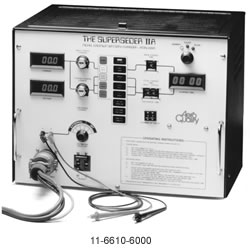
JFM Superseder III and Superseder IIIC
The JFM Superseder III and Superseder IIIC remain proven tools in aviation battery maintenance, especially for Ni-Cd battery programs. While their core design is older than some newer battery analyzer platforms, they’re still widely trusted in the field.
The Superseder IIIC builds on the standard Superseder III by adding enhanced data capabilities, including an internal shunt for integration with systems such as BTAS16. That makes it a stronger option for synchronized testing and data logging workflows.
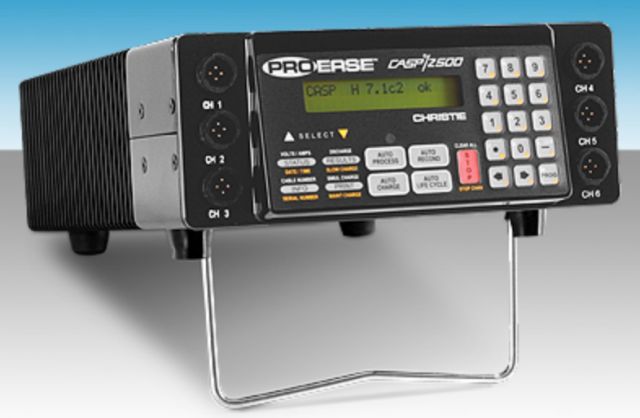
Christie CASP/2500H
Some aviation battery charger/analyzers are more specialized depending on their configuration, and the Christie CASP/2500H is an example of a platform that may be better suited for targeted applications.
For maintenance teams with unique testing requirements, specialized configurations can be worth evaluating alongside general-purpose top models. If your operation supports niche battery applications or requires more tailored test logic, this type of system may be a better fit than a broader, general-purpose analyzer.
When Does a Single-Function Battery Charger or Analyzer Make More Sense?
Not every operation needs an all-in-one battery charger/analyzer platform. In many shops, a single-function battery charger or battery capacity analyzer is the better fit – especially when your workflow already includes separate equipment for charging, testing, or conditioning.
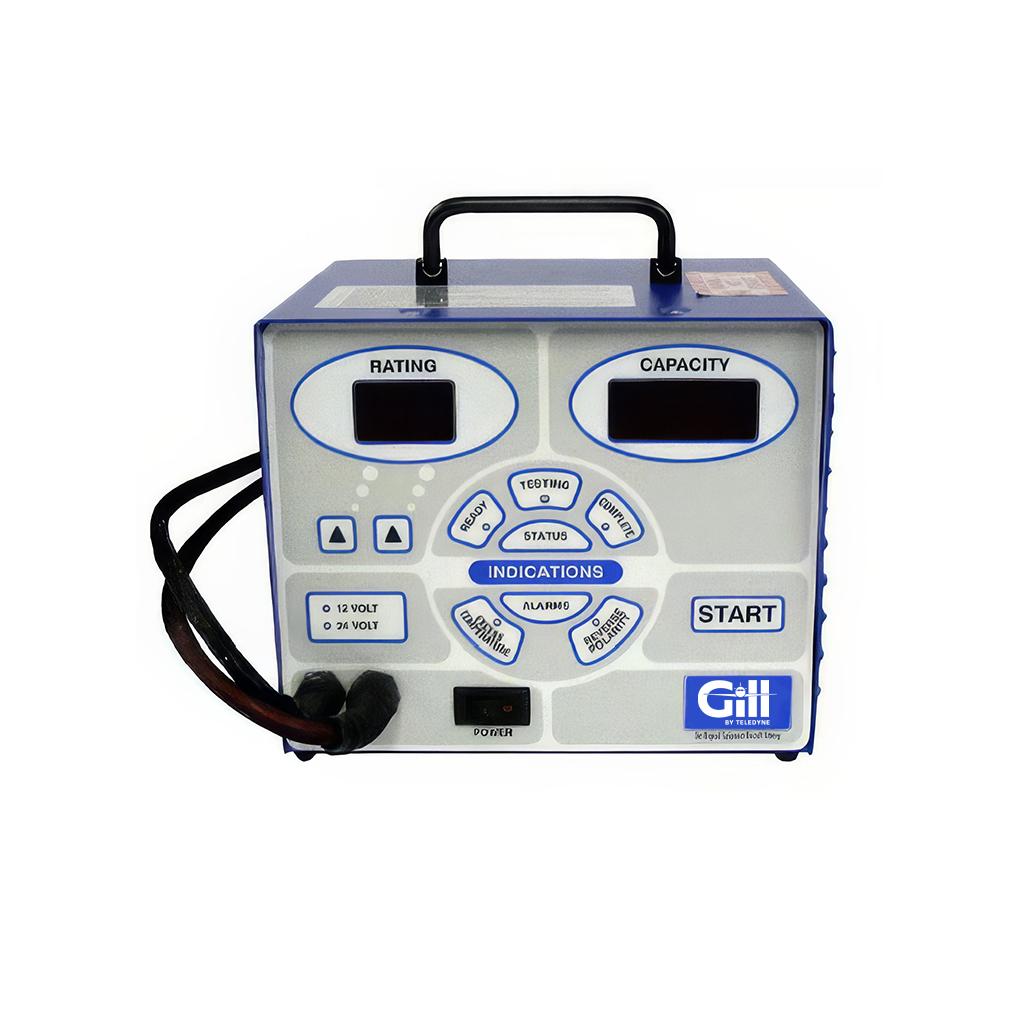
The Teledyne Gill TCT-1000 Battery Buddy, for example, is a 12V/24V aircraft battery capacity analyzer designed to verify battery performance, while the Teledyne Gill TDMC+ is a dedicated aircraft battery charger that supports reliable charging routines for specified Gill battery types.
ATEQ also offers focused solutions, such as the BC-1500 (for battery charging only) and the BA-1500 (for analysis/testing only). These units are designed specifically for lead-acid aircraft batteries, making them a strong option for teams that want modular capability without investing in a single combination charger/analyzer.
Multifunction tools can also play a valuable role in certain maintenance programs. BatteryMINDer’s lineup of aviation battery charger/maintainer/desulfators is a strong example of equipment designed to support long-term battery care – especially for operators who want a solution that helps maintain charge condition, reduces sulfation-related degradation, and supports consistent storage practices without requiring a full battery shop setup.
How Do I Choose the Right Battery Charger/Analyzer for My Operation?
The best battery charger/analyzer is the one that matches your battery chemistry mix, testing requirements, shop environment, and compliance needs. Use the steps below to narrow down which top model best fits your needs.
1. Identify Your Aircraft Battery Chemistry Needs
Start by listing the types of aircraft batteries you maintain, including lead-acid, Ni-Cd, lithium-ion, and backup power supplies. The right charger/analyzer should match those chemistries and support the testing procedures required for each.
2. Prioritize Your Required Testing Depth
If you require more advanced testing capabilities, consider features such as discharge curve validation, slope verification, and automated cycling. For backup batteries with time-based discharge requirements, constant resistance testing may also be necessary.
3. Match the Tool to Your Shop Environment
Consider whether your battery maintenance is done at a dedicated battery shop, on the flight line, or in a hangar setting. Portability, footprint, and durability can be significant factors in deciding where testing is performed.
4. Confirm Protection Features and Safe Servicing Practices
Look for reverse polarity protection, short-circuit protection, and temperature monitoring to ensure safer operation and help reduce the risk of damaging aircraft batteries.
5. Balance Cost vs. Value Based on Testing Frequency
A more advanced unit may cost more upfront, but it can pay off through labor savings, reduced downtime, and in-house testing capability. The more frequently you service aircraft batteries, the more value a full-featured charger/analyzer can deliver.
Where Can I Find High-Quality Aviation Battery Chargers and Analyzers?
Pilot John International® (PJi®) supports aircraft battery maintenance with a wide range of aviation battery chargers, battery analyzers, and capacity testers for both flight line and battery shop operations. Whether you’re maintaining airplane batteries for general aviation, business aviation, or fleet operations, having the right battery maintenance equipment is essential for safety, reliability, and compliance.
From advanced charger/analyzer systems to portable solutions for backup batteries, PJi helps maintenance teams select tools that support consistent testing, efficient workflows, and dependable performance across your battery program.
The Bottom Line
Battery charger/analyzer systems play a direct role in aircraft safety, reliability, and operational efficiency by supporting proper charging, capacity testing, and performance validation. They also help maintenance teams reduce downtime, improve dispatch readiness, and extend aircraft battery service life through repeatable servicing routines.
PJi supplies premium aircraft battery servicing equipment – including battery chargers, battery analyzers, and combination charger/analyzers – from top brands like ATEQ Aviation, Christie, Lamar Technologies, ShockBox, Teledyne Gill, and Tronair. We also offer a wide selection of aviation battery chargers, maintainers, and desulfators from BatteryMINDer.
Contact our aviation specialists by phone, email, or live chat for help selecting the best solution for your aircraft batteries and maintenance workflow.