
Gill Batteries on Sale + Free Shipping on Select Models

Menu

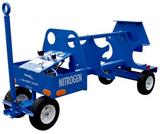
4920015531951 - Tronair 18-4208-0010 Towable 4-Bottle Nitrogen Cart with Booster, Manifold, & Regulators

Available for Order
Lead Time: Chat now or request quote
Specific Part Number

The 4920015531951 is a specific part number of the series Tronair 18-4208-0010. For more generalized information on this item series or for more options, click here.

Do you want a 4 bottle cart with a nitrogen booster?:
CofC and 8130 available at no cost
Worldwide shipping available
Ask Our Aviation Specialists
Live Chat | +1.252.585.4553 | Email

Need a Quote?

Use this form to get a quote by email today.
First Name:*
Last Name:*
Email:*
Company Name: (optional)
Questions/Comments: (optional)
National Stocking Number (NSN)
Alternate Models
4920015531951National Stocking Number (NSN)
General Information
Part #4920015531951
ManufacturerTronair
NSN4920015531951
Manual 1View Tronair 18-4208-0010 Manual
Shipping Information
Shipping Weight605 lbs.
Shipping Dimensions87 x 42 x 47 in.
Freight NMFC189800
Schedule B8716390020
ECCNEAR99

Customers also viewed

Tronair 18-4303-0000
4-Bottle Nitrogen Cart with High/Low-Pressure Regulators
Tronair 18-4201-1010
– Up to 4,000 PSIG
Tronair 20-4505-7000
4-Bottle Oxygen Cart with Oxygen Booster, Manifold, & High-Pressure Regulator
Tronair 18-4200-1100
– Up to 3,000 PSIG
Tronair 20-4504-7000
with Manifold & High/Low Pressure Regulators

Customers who bought this item also purchased
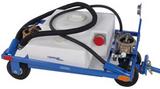
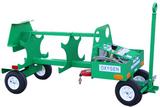
Tronair 20-4505-7000
4-Bottle Oxygen Cart with Oxygen Booster, Manifold, & High-Pressure Regulator
Tronair 10-4036-0010
Small Aircraft Lavatory Service Cart – 31-Gallon Waste, 15-Gallon Fill
Tronair K-2410
Replacement Fill Connector Kit for Select Tronair Lavatory Service Carts
Tronair 20-4504-7000
with Manifold & High/Low Pressure Regulators
Tronair 06-5022-6500
2-Gallon Hydraulic Fluid Service Unit – MIL-PRF-5606 & MIL-PRF-83282 Fluids

AIRCRAFT COMPATIBILITY

Compatible Aircraft*
Adam A500 , A700
Agusta AW189
Airbus A220-100 (CS100) , A220-300 (CS300) , A300 , A310 , A318 , A319 , A320 , A321 , A330-200 , A330-300 , A340-200 , A340-300 , A340-500 , A340-600 , A350 , A380
Airbus Military (CASA) 212-100 , 212-200 , C-295 , CN-235/HC-144A
ATR 42 , 72
BAe 146-100, -200, -300/Avro RJ70, RJ85, RJ100 , ATP , Jetstream 31 , Jetstream 41 , RJ70 , RJ85
Bell 214 , 214ST , 222 , 230 , 412 , 429 , 430
Boeing 707 , 717 , 727-100 , 727-200 , 737-100 , 737-200 , 737-300 , 737-400 , 737-500 , 737-600 , 737-700 , 737-800 , 737-900 , 737-BBJ , 737-BBJ2 , 747 , 757 , 767 , 777 , 787 , DC-8 Series 60 , DC-9 Series 10 , DC-9 Series 20 , DC-9 Series 30 , DC-9 Series 33 , DC-9 Series 40 , DC-9 Series 50 , KC-46 , MD-80 , P-8 Poseidon
Bombardier C-21 , Challenger 300 , Challenger 350 , Challenger 600 , Challenger 601 , Challenger 604 , Challenger 605 (CL605) , Challenger 650 , Challenger 850 , Challenger 870 , Challenger 890 , CRJ100 , CRJ1000 , CRJ200 , CRJ700 , CRJ705 , CRJ900 , CS100 , CS300 , Dash 6 (Twin Otter UV-18A) , Dash 7 , Dash 8-100 , Dash 8-200 , Dash 8-300 , Dash 8-400 , Global 5000 , Global 5500 , Global 6000 , Global 6500 , Global 7000 , Global 7500 , Global 8000 , Global Express , Global Express XRS , Learjet 23 , Learjet 24 , Learjet 25 , Learjet 31 , Learjet 31A , Learjet 35 , Learjet 45 , Learjet 55 , Learjet 60 , Learjet 70 , Learjet 75
Cessna 408 SkyCourier , Ascend , Bravo , Citation 560 XL , Citation 560 XLS , Citation 650 , Citation CJ1 , Citation CJ2 , Citation CJ3 , Citation CJ4 , Citation Encore 560 , Citation I 500 , Citation I/SP 501 , Citation II 550 , Citation III , Citation M2 , Citation SII , Citation Sovereign 680 , Citation Ultra 560 , Citation V , Citation VI , Citation VII , Citation X 750 , Latitude 680A , Mustang 510
Comac ARJ21
Dassault Falcon 10-100 , Falcon 20-200 , Falcon 2000 , Falcon 2000EX , Falcon 50 , Falcon 50EX , Falcon 7X , Falcon 8X , Falcon 900 , Falcon 900EX
Diamond Aircraft DA20-A1 , DA20-C1 , DA40 Diamond Star
Eclipse 500
Embraer E175-E2 , E190-E2 , E195-E2 , EMB-110 , EMB-120 , ERJ-135 , ERJ-140 , ERJ-145 , ERJ-170 , ERJ-175 , ERJ-190 , ERJ-195 , Legacy 450 , Legacy 500 , Legacy 600 , Legacy 650 , Lineage 1000 , Phenom 100 , Phenom 300 , Praetor 600
Eurocopter AS330 Puma , AS332 Super Puma , AS365N Dauphin , AS532 Cougar , BK-117 , BO-105 , H135 (EC135) , H145 (EC145) , H175 (EC175) , H225M (EC725 Super Cougar) , UH-72A Lakota
Eurofighter Typhoon
Fairchild/Dornier Dornier DO328 , Dornier DO328 Jet , Metro Merlin III , Metro Merlin IV
Fokker 100 , 50
General Dynamics Convair 580 , Convair 600 , Convair 640
Grob G120A , G120TP
Gulfstream G100 (Astra SPX) , G150 , G200 (Galaxy) , G280 , G350 , G450 , G500 , G550 , G600 , G650 , G650ER , G700 , II , III , IV , IVSP , V , VSP
Hawker Beechcraft Beech 1900 , Beech 99 , Beechjet 400A , C-12 , Diamond , Hawker 1000 , Hawker 4000 (Horizon) , HS-125 400 Series , HS-125 800 / 850 / 900 Series , King Air , Premier , T-1 Jayhawk , T-400 , T-6A Texan II
HondaJet HA-420 HondaJet
IAI Astra , Westwind 1 , Westwind 2
Lockheed Jetstar C-140
McDonnell Douglas DC-10 , DC-8 Series 60 , DC-9 Series 10 , DC-9 Series 20 , DC-9 Series 30 , DC-9 Series 33 , DC-9 Series 40 , DC-9 Series 50 , MD-11 , MD-80
Piaggio P-180 Avanti
Pilatus PC-12 , PC-24 , PC-9
Saab 2000 , 340
Sabreliner 40 Series , 60 Series , 70 Series
Shorts 330 , 360
Sikorsky CH-148 , H-92 Superhawk , MH-60R, SH-60B/F, HH-60H, HH-60J, S-70B, S-70i , S-65 (CH53, HH53, MH53, Sea Stallion) , S-76 (AUH-76) , S-92 , UH-60 Black Hawk, MH-60S Seahawk
Sino Swearingen SJ30-2
Sukhoi SJ100
*This list is for general reference only and may not be entirely accurate for all aircraft. Please confirm all equipment meets the requirements of your aircraft with the owners/maintenance manuals prior to purchasing or using with your aircraft.

PRODUCT REVIEWS

5/5
by Mike in Minneapolis, MN USA
04/28/2025 12:06:11 PM
Pilot John's customer service team was great. They responded right away with price and lead time. The delivery was accurate and on time. The proper certification arrived with the part as well.
5/5
by Tony, a Military Operation in Afghanistan
06/07/2017 07:36:57 AM
Great Product and excellent support. We are using these items in Afghanistan to support Afghan and US military personnel and we need a reliable product, Tronair has those products.

QUESTIONS & ANSWERS

Question:
What is the Tronair 18-4208-0010 nitrogen cart used for?
Answer:

The Tronair 18-4208-0010 is a towable nitrogen service cart designed to charge and service aircraft systems requiring high-pressure nitrogen. It supplies nitrogen for tire inflation, strut servicing, and charging hydraulic accumulators. The unit includes an onboard booster, four-bottle manifold, and precision regulators for reliable and consistent delivery.

Asked October 27, 2025
Question:
Is the Tronair 18-4208-0010 nitrogen cart CE marked?
Answer:

Yes, the Tronair 18-4208-0010 nitrogen cart is CE marked. This certification ensures that the equipment complies with European safety, health, and environmental protection requirements, making it suitable for use in international aviation operations where CE compliance is required.

Asked October 27, 2025
Question:
What is the proper way to connect nitrogen bottles to the manifold?
Answer:

Each nitrogen bottle must be securely connected to the manifold using high-pressure hoses. Before connecting, verify that all shutoff valves are closed and inspect the hoses for any damage or cross-threading. It’s also advised to rotate bottle usage to maximize efficiency by drawing from lower-pressure bottles first.

Asked October 27, 2025
Question:
How do I charge an aircraft’s high-pressure nitrogen system with this cart?
Answer:

To charge an aircraft’s high-pressure system, connect the nitrogen service line to the aircraft port and open the valves slowly to prevent pressure surges. Use the onboard booster to elevate nitrogen pressure up to 4,000 PSIG, monitoring gauges throughout the process. Always open and close valves gradually to maintain safety and prevent damage to aircraft systems.

Asked October 27, 2025
Question:
Can I use oxygen or other gases in this cart besides nitrogen?
Answer:

No. The Tronair nitrogen cart is designed exclusively for use with nitrogen. Using oxygen or other gases creates serious safety risks and can contaminate internal components. Always ensure only pure, dry nitrogen is used in the system.

Asked October 27, 2025
Question:
How should this nitrogen cart be stored when not in use?
Answer:

The unit should be stored in a clean, dry, and well-ventilated area with all valve caps in place and hoses disconnected. Proper storage minimizes the risk of contamination and ensures the nitrogen system remains clean for future use. Keep the cart protected from excessive heat, dust, and moisture to extend its service life.

Asked October 27, 2025
Question:
What kind of maintenance is required for this nitrogen cart?
Answer:

Routine maintenance includes greasing wheel bearings, inspecting hoses, fittings, and valves for leaks or damage, and replacing worn parts as needed. Annual servicing of the air cycling valve seal kits is recommended to maintain booster efficiency. For carts used heavily or in harsh environments, schedule booster pump inspection and recalibration as part of preventive maintenance.

Asked October 27, 2025
Question:
How does the nitrogen booster function on this cart?
Answer:

The nitrogen booster uses compressed air to amplify pressure from the nitrogen supply bottles. It allows the operator to deliver nitrogen up to 4,000 PSIG for aircraft systems that require high pressure. The booster is designed to cycle automatically as pressure drops, maintaining a steady flow without manual adjustment.

Asked October 27, 2025
Question:
What type of nitrogen cylinders can be used with the 18-4208-0010?
Answer:

This cart accommodates standard high-pressure nitrogen cylinders that meet aviation industry specifications, typically rated for 2,000 to 2,600 PSIG. Cylinders must be secured properly in the cart’s cradle using the provided straps and brackets. Always confirm cylinder certifications and hydrostatic test dates before installation to ensure compliance.

Asked October 27, 2025
Question:
How is the nitrogen pressure regulated and monitored during servicing?
Answer:

The cart features dual-stage regulators and precision gauges, allowing technicians to independently control both inlet and outlet pressures. This ensures safe, accurate pressure control for aircraft tire, strut, or accumulator servicing. Gauges should be calibrated periodically to maintain accuracy in high-pressure applications.

Asked October 27, 2025
Question:
What safety precautions should technicians follow when operating this nitrogen cart?
Answer:

Operators should always wear proper protective equipment, including eye and hand protection, and avoid standing directly in front of pressurized fittings. Ensure all connections are tight before introducing pressure, and open valves slowly to prevent sudden surges. Never exceed rated pressures or operate the cart near open flames or electrical sparks.

Asked October 27, 2025
Question:
How is the Tronair 18-4208-0010 transported safely on the ramp?
Answer:

The nitrogen cart is equipped with a towbar and pneumatic tires for easy transportation across hangar floors or ramp surfaces. Use a suitable towing vehicle and maintain a moderate speed when moving the unit. Always verify that cylinders are properly secured and that all hoses are stowed before transport.

Asked October 27, 2025
Question:
What are the environmental operating conditions for this nitrogen cart?
Answer:

The cart is designed for use in hangars and on ramps in typical aviation service environments. It performs reliably across a broad temperature range, but operation in extremely cold or humid conditions may require additional moisture control in the air supply. Keeping the unit sheltered when not in use helps prevent corrosion and extend service life.

Asked October 27, 2025
Question:
How can I verify if the nitrogen booster is working correctly?
Answer:

A properly functioning booster will cycle smoothly and evenly, maintaining consistent output pressure as nitrogen is delivered. If cycling slows, stalls, or becomes erratic, check for low inlet pressure, air leaks, or contamination in the air drive system. Routine inspection of seals and air filters helps maintain consistent performance.

Asked October 27, 2025
Question:
What should be done if a pressure leak is detected during use?
Answer:

Immediately close all valves, depressurize the system, and inspect fittings and hose connections for signs of wear, cracking, or looseness. Replace any damaged components before repressurizing the system. Persistent leaks should be reported for service, as they may indicate internal seal wear in the booster or manifold.

Asked October 27, 2025
Question:
How often should the nitrogen system be inspected for calibration and safety compliance?
Answer:

Pressure gauges and regulators should be verified for calibration at least once per year, or more frequently in high-usage environments. Inspections ensure the cart delivers accurate nitrogen pressure during critical maintenance tasks. Maintaining calibration documentation also supports compliance with aviation maintenance standards and internal QA audits.

Asked October 27, 2025
Question:
Where can I purchase replacement parts or service kits for this nitrogen cart?
Answer:

Genuine Tronair replacement parts and service kits are available directly through PJi. We offer OEM-certified components and expert support for maintaining aircraft nitrogen systems. Contact PJi’s aviation specialists for parts assistance or technical guidance.

Asked October 27, 2025